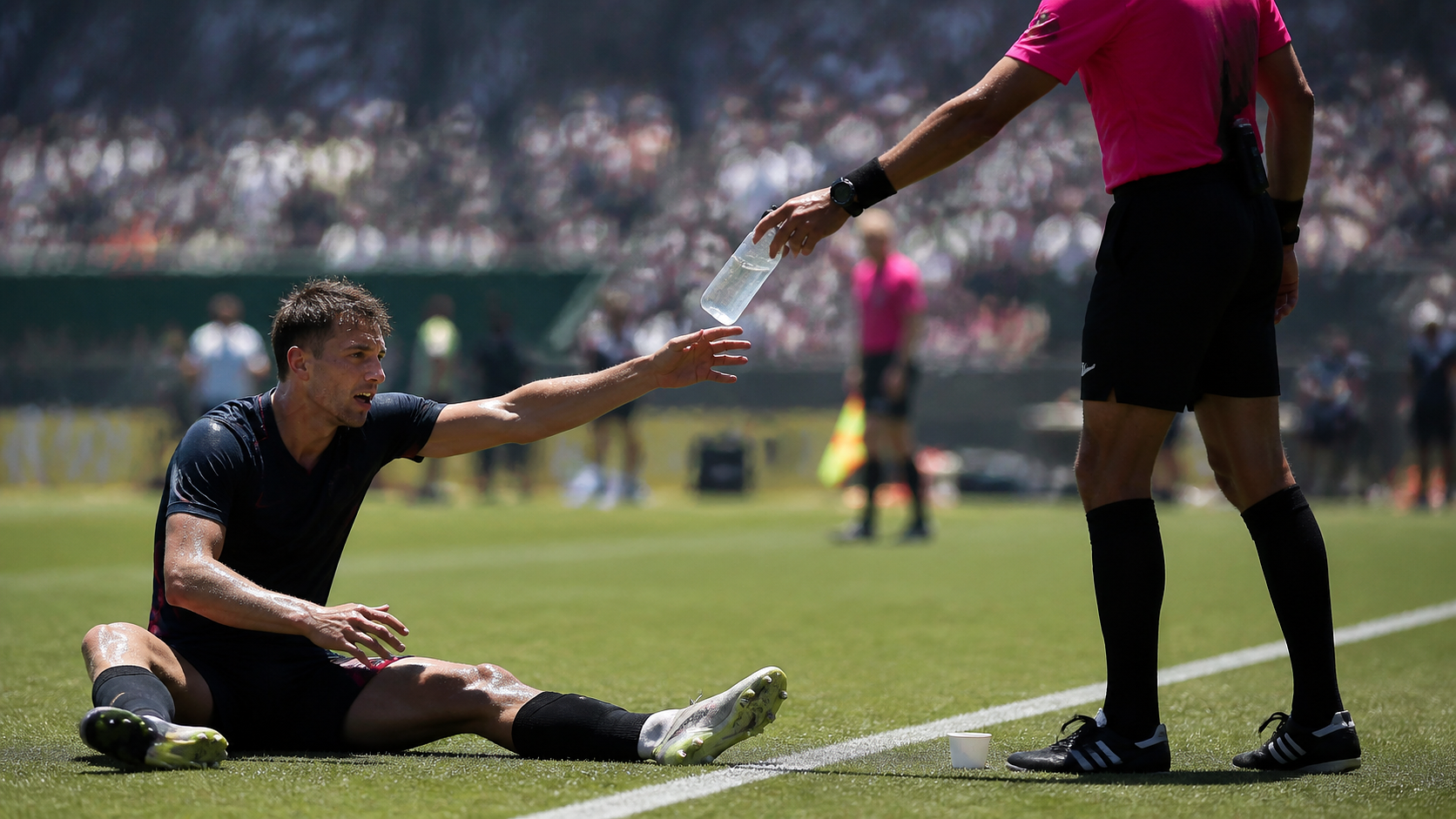
Let me set the scene. It is summer. The 2026 World Cup is being played across the United States, Mexico, and Canada, a continent currently sitting under what meteorologists, in their timidity, are calling a "heat dome." Research out of Queen's University Belfast crunched twenty years of data and found that 14 of the 16 stadiums could hit temperatures dangerous to human beings.
And into this inferno, FIFA made the single bravest decision in the history of organized sport: they banned you from bringing your own water.
The mob revolted. Prime ministers whined. The Mayor of New York clutched his reusable Nalgene like a security blanket. And I sat back, took a slow pull of my glass-bottled Norwegian iceberg water, harvested from a 4,000-year-old glacier and served at cellar temperature, and thought: finally, an institution with the courage to identify the real enemy. Not the heat. Not the humidity. You. And your bottle.
Understand the Genius Here
FIFA's own spokesperson explained the ban was made "to prevent risk and injury to players and attendees." Read that again. The bottle is the risk. The bottle is the injury. For decades we blamed dehydration, but visionary organizations know that dehydration cannot hurt you if you never had the water to begin with. You cannot spill what you do not possess. Checkmate, science.
Some skeptic will point out that 14 of 16 venues are dangerously hot and that removing fans' water access during a heat wave might, and I'm quoting the naysayers here, "kill people." To which FIFA offered the perfect rebuttal: misting stations. Outside the stadium. Before you go through security. So hydrate at 1 p.m. for a match you'll be sweating through until 4. Plan ahead, sheep. A truly elite fan drinks once and simply holds it.
The Hydration Break: A Masterstroke of Restraint
Now, for the players, FIFA graciously installed a mandatory three-minute hydration break 22 minutes into each half. And here's the part that brings a tear to my eye: these breaks happen in every single one of the 104 matches, regardless of temperature, regardless of whether the stadium has a roof, regardless of whether it's air-conditioned.
Do you understand the commitment to consistency? It could be 55 degrees with a retractable roof and a gentle breeze, and FIFA will still stop the game to make grown professionals drink water they don't need, purely so no one accuses them of playing favorites with hydration. That's not overcorrection. That's principle. Meanwhile the fan in Section 314, who paid a fortune for the ticket, gets a misting tent and a firm handshake.
The Only Flaw in the Plan
If I have one criticism of FIFA, and I say this as the policy's biggest defender, it's that they got scared. After the "backlash," the "public pressure," the meddling of career politicians, FIFA folded and announced fans could bring in one soft, 20-ounce, factory-sealed disposable bottle after all. One. Twenty ounces. For a three-hour event in a heat dome.
Weak. Spineless. They had them. They had the whole world agreeing that water is dangerous, and they blinked. A real leader doubles down. A real leader bans the bottle, then bans the mist, then bans sweat itself as an unsanctioned form of moisture. If we're going to make the World Cup a survival exercise, commit to the bit.
The Final Word
Look, plenty of so-called experts think an organization that stops all 104 games to hydrate its players while confiscating water from its paying fans might have priorities that are, shall we say, upside down. That it might, God forbid, be about selling you a $9 bottle inside the gate.
Ridiculous. FIFA isn't in the business of money. FIFA is in the business of protecting you from the terrifying liquid you were foolish enough to bring from home. And someday, when you're standing in a 100-degree stadium having hydrated responsibly at noon, you'll thank them.
You're welcome. And that's the final word.